
Derzeit nicht verfügbar
Handgeprüfte Gebrauchtware
Bis zu 50 % günstiger als neu
Der Umwelt zuliebe
Optischer Zustand
Beschreibung
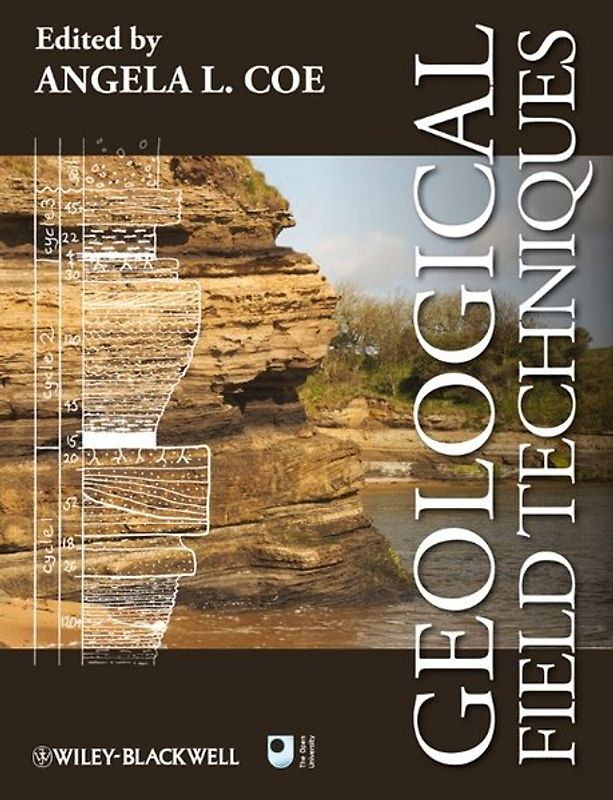
The understanding of Earth processes and environments over geological time is highly dependent upon both the experience that can only be gained through doing fieldwork, and the collection of reliable data and appropriate samples in the field. This textbook explains the main data gathering techniques used by geologists in the field and the reasons for these, with emphasis throughout on how to make Dieses Produkt haben wir gerade leider nicht auf Lager.
Handgeprüfte Gebrauchtware
Bis zu 50 % günstiger als neu
Der Umwelt zuliebe
Technische Daten
Erscheinungsdatum
08.10.2010
Sprache
Englisch
EAN
9781444330618
Herausgeber
John Wiley & Sons
Sonderedition
Nein
Autor
Angela L. Coe
Seitenanzahl
336
Auflage
1
Einbandart
Gebundene Ausgabe
Autorenporträt
Dr Angela L. Coe specializes in sedimentology and stratigraphy and has over 20 years of experience of collecting geological field data in Europe, Asia, North and South America. Over this time, she has also designed and taught field geology courses for several UK universities and has led many field trips for international conferences and petroleum companies.
Dr Tom W. Argles is a geologist who has conducted structural and metamorphic fieldwork in several mountain belts (Alps, Himalaya, Betic Cordillera, Caledonides, Basin and Range) for 20 years. He has set up and taught field courses in a range of locations across the UK and Europe
Dr David A. Rothery is a volcanologist and planetary scientist. He has taught geology in the field for 30 years and has research experience of igneous rocks (including active volcanoes) in the Oman, Cyprus, Italy, the Andes, central America, NW USA, Hawaii and Western Australia.
Professor Robert A. Spicer is a palaeobotanist and sedimentologist with over 30 years field experience working in remote regions of Northern Alaska and northeastern Russia, China and Tibet, India, Australia, New Zealand, and Mexico.
Schlagwörter
Geowissenschaften
Inhaltsverzeichnis
Preface.
Acknowledgements.
1 Introduction.
1.1 A selection of general books and reference material on geology.
1.2 Books on geological field techniques.
2 Field equipment and safety.
2.1 Introduction.
2.2 The hand lens and binoculars.
2.3 The compass-clinometer.
2.3.1 Orientation of a dipping plane.
2.3.2 Orientation of a linear feature.
2.3.3 Triangulation: Determining location using a compass.
2.4 Global positioning systems and altimeters.
2.5 Measuring distance and thickness.
2.5.1 Standard thickness and distance measurements.
2.5.2 Use of the Jacob staff to measure the thickness of inclined strata.
2.6 Classification and colour charts.
2.7 Hammer, chisels and other hardware.
2.8 The hardcopy field notebook.
2.9 The laptop, netbook or PDA as a notebook.
2.10 Writing equipment, maps and relevant literature.
2.10.1 Writing equipment.
2.10.2 Maps and relevant literature.
2.11 Comfort, field safety and field safety equipment.
2.11.1 Clothes, backpack/rucksack and personal provisions.
2.11.2 Field safety.
2.11.3 Field safety equipment.
2.12 Conservation, respect and obtaining permission!.
2.13 Further reading.
3 Introduction to field observations at different scales.
3.1 Introduction: What, where and how?.
3.1.1 Defining the fieldwork objective.
3.1.2 Deciding where to do the fieldwork.
3.1.3 Locating your position.
3.2 Scale of observation, where to start and basic measurements.
3.2.1 Regional context.
3.2.2 Whole exposure.
3.2.3 Hand specimens.
3.3 Overview of possible data formats.
4 The field notebook.
4.1 Introduction: The purpose of field notes.
4.2 Field notebook layout.
4.2.1 Preliminary pages.
4.2.2 Daily entries.
4.2.3 General tips.
4.3 Field sketches: A picture is worth a thousand words.
4.3.1 General principles: Aims, space and tools.
4.3.2 Sketches of exposures.
4.3.3 Sketching metre- and centimetre-scale features.
4.3.4 Sketch maps.
4.4 Written notes: Recording data, ideas and interpretation.
4.4.1 Notes recording data and observations.
4.4.2 Notes recording interpretation, discussion and ideas.
4.5 Correlation with other data sets and interpretations.
5 Recording palaeontological information.
5.1 Introduction: Fossils are smart particles.
5.1.1 Why are fossils important?.
5.1.2 Collecting fossil data.
5.2 Fossil types and preservation.
5.2.1 Body fossil classification.
5.2.2 Body fossil preservation.
5.2.3 Trace fossils.
5.2.4 Molecular fossils.
5.3 Fossil distribution and where to find them.
5.3.1 Transported or life position?.
5.4 Sampling strategies.
5.4.1 Sampling for biostratigraphic or evolutionary studies.
5.4.2 Sampling of bedding surfaces and palaeoecology.
5.5 Estimating abundance.
5.5.1 Presence/absence and qualitative abundance estimates.
5.5.2 Quantitative measures of abundance.
5.5.3 How many samples are required?.
5.6 Summary.
5.7 Further reading.
6 Recording features of sedimentary rocks and constructing graphic logs.
6.1 Introduction.
6.2 Description, recognition and recording of sedimentary deposits and sedimentary structures.
6.2.1 Recording sedimentary lithology.
6.2.2 Recording sedimentary structures.
6.3 Graphic logs.
6.3.1 Conventions for graphic logs.
6.3.2 Constructing a graphic log.
6.4 Rocks in space: Reconstructing sedimentary environments and their diagnostic features.
6.5 Using sedimentary rocks to interpret climate change and sea-level change.
6.5.1 Climate change.
6.5.2 Sequence stratigraphy and relative sea-level change.
6.6 Further reading.
7 Recording features of igneous rocks.
7.1 Equipment, basic tips and safety.
7.2 Field relationships of igneous rocks.
7.2.1 Relationships with surrounding rocks.
7.2.2 Internal architecture: Joints and veins.
7.2.3 Internal architecture: Other exposure-scale fabrics.
7.3 Mineralogy and small-scale textures of igneous rocks.
7.3.1 Petrologic type.
7.3.2 Mineral texture and fabric.
7.4 Recent and active volcanoes.
7.4.1 Equipment and safety.
7.4.2 Access.
7.4.3 Observations.
7.5 Further reading.
8 Recording structural information.
8.1 Equipment and measurement.
8.1.1 Structural measurements and notations.
8.2 Brittle structures: Faults, joints and veins.
8.2.1 Planar brittle features - orientation.
8.2.2 Determining past motion on brittle structures.
8.3 Ductile structures: Shear zones, foliations and folds.
8.3.1 Orientation of ductile planar features.
8.3.2 Direction of shear/stretching: Stretching lineations.
8.3.3 Sense of shear: Kinematic indicators.
8.3.4 Magnitude of shear strain.
8.3.5 Fold analysis.
8.4 Further reading.
9 Recording features of metamorphic rocks.
9.1 Basic skills and equipment for metamorphic fieldwork.
9.1.1 Field relations and context.
9.2 Textures.
9.2.1 Banding.
9.2.2 Grain textures.
9.2.3 Reaction textures.
9.3 Mineralogy.
9.3.1 Identifying common metamorphic minerals.
9.3.2 Using mineral assemblages.
9.3.3 Classification of metamorphic rocks.
9.4 Unravelling metamorphism and deformation.
9.4.1 Pre-kinematic features.
9.4.2 Syn-kinematic features.
9.4.3 Post-kinematic features.
9.5 Further reading.
10 Making a geological map.
10.1 Principles and aims.
10.2 Preparation and materials.
10.2.1 Base maps and other aids.
10.2.2 Equipment for mapping.
10.3 Location, location, location.
10.3.1 Equipment.
10.3.2 Using base maps.
10.4 Making a field map.
10.4.1 Information to record on field maps.
10.4.2 The evolving map.
10.4.3 Sketch cross-sections.
10.5 Mapping techniques.
10.5.1 Traverse mapping.
10.5.2 Contact mapping.
10.5.3 Exposure mapping.
10.5.4 Using other evidence.
10.6 The geological map.
10.6.1 Inking in the field map.
10.6.2 Cross-sections.
10.6.3 Fair copy maps.
10.6.4 Digital maps and GIS.
10.7 Further reading.
11 Recording numerical data and use of instruments in the field.
11.1 Data collection.
11.1.1 Instrument calibration and base stations.
11.1.2 Survey grid.
11.2 Transport and protection of the instruments.
11.3 Correlation with other data sets.
11.4 Further reading.
12 Photography.
13 Sampling.
13.1 Selecting and labelling samples.
13.1.1 Samples for thin-sections.
13.1.2 Orientated samples.
13.1.3 Samples for geochemical analysis.
13.1.4 Samples for mineral extraction.
13.1.5 Samples for fossils.
13.1.6 Sampling for regional studies.
13.1.7 High-resolution sample sets.
13.1.8 Labelling samples and their packaging.
13.2 Practical advice.
13.2.1 Packing and marking materials.
13.2.2 Extraction of samples.
14 Concluding remarks.
14.1 Further reading on scientific report writing.
References.
Appendix A1: General.
Appendix A5: Fossils.
Appendix A6: Sedimentary.
Appendix A7: Igneous.
Appendix A8: Structural.
Appendix A9: Metamorphic.
Appendix A10: Mapping.
Index.
Höhe
250 mm
Breite
19.3 cm
-.-
Leider noch keine Bewertungen
Leider noch keine Bewertungen
Sicher bei rebuy kaufen

Schreib die erste Bewertung für dieses Produkt!
Wenn du eine Bewertung für dieses Produkt schreibst, hilfst du allen Kund:innen, die noch überlegen, ob sie das Produkt kaufen wollen. Vielen Dank, dass du mitmachst!
Sicher bei rebuy kaufen