
Derzeit nicht verfügbar
Handgeprüfte Gebrauchtware
Bis zu 50 % günstiger als neu
Der Umwelt zuliebe
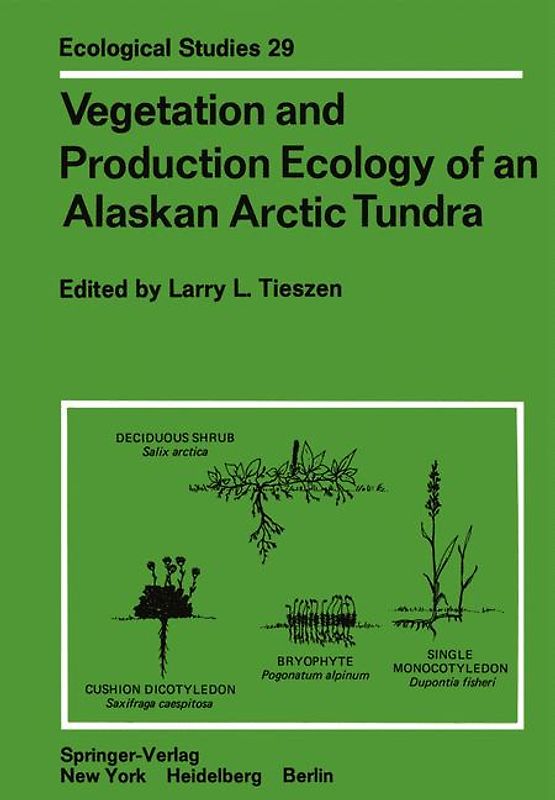
Vegetation and Production Ecology of an Alaskan Arctic Tundra
(Gebundene Ausgabe, Englisch)
Keine Bewertungen vorhanden
Optischer Zustand
Beschreibung
This volume on botanical research in tundra represents the culmination of four years of intensive and integrated field research centered at Barrow, Alaska. The volume summarizes the most significant results and interpretations of the pri mary producer projects conducted in the U.S. IBP Tundra Biome Program (1970-1974). Original data reports are available from the authors and can serve as detailed Dieses Produkt haben wir gerade leider nicht auf Lager.
Handgeprüfte Gebrauchtware
Bis zu 50 % günstiger als neu
Der Umwelt zuliebe
Technische Daten
Erscheinungsdatum
02.07.1979
Sprache
Englisch
EAN
9780387903255
Herausgeber
Springer US
Serien- oder Bandtitel
Ecological Studies
Sonderedition
Nein
Seitenanzahl
686
Einbandart
Gebundene Ausgabe
Bandzählung
29
Schlagwörter
Assimilat, fungi, ecosystem, Pflanzengesellschaft, vegetation, plant growth, plants, nitrogen, ecology, plant, Transpiration, environment, temperature, biology, Flora
Thema-Inhalt
PST - Botanik und Pflanzenwissenschaften
PST - Botanik und Pflanzenwissenschaften
TVB - Agrarwissenschaften
Inhaltsverzeichnis
Section I. Floristics, Vegetation, and Primary Production.- 1. Introduction.- Background.- Research Design and Site Selections.- Overview of the Barrow Ecological System.- References.- 2. Vegetation, Floristics, and Phytogeography of Northern Alaska.- Tundra Landscapes and Vegetation.- Floristics and Phytogeography.- Acknowledgments.- References.- 3. Spatial and Temporal Variation of the Vegetation and its Productivity.- and Site Overview.- Methods.- Results.- Discussion.- Summary and Conclusions.- Acknowledgments.- References.- 4. Seasonal Dynamics of Above- and Belowground Production of Vascular Plants at Barrow, Alaska.- Methods and Materials.- Results.- Discussion.- Acknowledgments.- References.- 5. Floristics, Phytogeography and Ecology of Arctic Alaskan Bryophytes.- The Bryophyte Flora and its Floristic Elements.- Ecology and Physical Factors of the Environment.- Acknowledgments.- References.- 6. Composition and Bryomass of the Moss Layers of Two Wet-Tundra-Meadow Communities near Barrow, Alaska.- Materials and Methods.- Results.- Discussion.- Acknowledgments.- References.- 7. The Role of Lichens in the Structure, Productivity, and Mineral Cycling of the Wet Coastal Alaskan Tundra.- Environmental Setting.- Lichen Occurrence.- Methods.- Results and Discussion.- Conclusions.- Acknowledgments.- References.- 8. The Role of Algae in Tundra Soil.- Methods.- Results and Discussion.- Conclusions.- Acknowledgments.- References.- 9. Ecto- and Endomycorrhizae of Arctic Plants at Barrow, Alaska.- Distribution of Ectomycorrhizae.- Distribution of Endomycorrhizae.- Distribution of Mycorrhizal Fungi.- Carbon, Nitrogen, and Phosphorus.- Conclusions and Discussion.- Acknowledgments.- References.- Section II. Photosynthesis, Respiration and Water Relations.- 10. Photosynthesis in the Principal Barrow, Alaska Species: A Summary of Field and Laboratory Responses.- Methods.- Results and Discussion.- Conclusions.- Acknowledgments.- References.- 11. Primary Production Processes in Arctic Bryophytes at Barrow, Alaska.- Field Research Site.- Methods.- Results and Discussion.- Conclusions.- Acknowledgments.- References.- 12. Meteorological Assessment of CO2 Exchange Over an Alaskan Arctic Tundra.- Theory.- Experimental Procedure.- Data Analysis.- Results.- Discussion.- Acknowledgments.- References.- 13. Constraints on Tundra Productivity: Photosynthetic Capacity in Relation to Solar Radiation Utilization and Water Stress in Arctic and Alpine Tundras.- Methods.- Results and Discussion.- Acknowledgments.- References.- 14. Some Aspects of Water Relations of Arctic and Alpine Regions.- Conceptual Framework.- Methods.- Results.- Discussion and Conclusions.- Acknowledgments.- References.- 15. Radio-Tracer Measurement of Transpiration in Tundra Vegetation, Barrow, Alaska.- Methods.- Results and Discussion.- Conclusions.- Acknowledgments.- References.- 16. Simulation of the Effect of the Tundra Vascular Plant Canopy on the Productivity of Four Moss Species.- Simulation Models and Methods.- Results and Discussion.- Acknowledgments.- References.- Section III. Growth and the Allocation and Use of Mineral and Organic Nutrients.- 17. Translocation and Allocation of 14C-Photoassimilate by Dupontia fisheri.- Materials and Methods.- Results.- Discussion.- Acknowledgments.- References.- 18. Growth, Turnover, and Respiration Rates of Roots and Tillers in Tundra Graminoids.- Methods.- Results.- Conclusions.- Acknowledgments.- References.- 19. The Interactions of Organic Nutrients, Soil Nitrogen, and Soil Temperature and Plant Growth and Survival in the Arctic Environment.- Materials and Methods.- Results.- Discussion and Conclusions.- Acknowledgments.- References.- 20. Plant Nutrient Limitations of Tundra Plant Growth.- Methods.- Results and Discussion.- Discussion and Conclusions.- Acknowledgments.- References.- 21. Phosphate Uptake and Nutrient Utilization by Barrow Tundra Vegetation.- Methods.- Results.- Discussion.- Acknowledgments.- References.- 22. Effects of Nitrogen and Phosphorus Fertilization on Carbohydrate and Nutrient Levels in Dupontia fisheri and Arctagrostis latifolia.- Methods.- Results and Discussion.- Conclusions.- Acknowledgments.- References.- 23. Nitrogen Fixation in Arctic and Alpine Tundra.- Methods.- Results and Discussion.- Conclusions.- Acknowledgments.- References.- 24. A Model of Plant Growth and Phosphorus Allocation for Dupontia fisheri in Coastal, Wet-Meadow Tundra.- Description of the Model.- Results.- Discussion.- Acknowledgments.- References.- 25. A Model of Carbohydrate, Nitrogen, Phosphorus Allocation and Growth in Tundra Production.- Results and Discussion.- Acknowledgments.- References.- 26. A Simulation Model of Population Processes of Arctic Tundra Graminoids.- The Model.- Methods of Simulations.- Validation.- Simulation Experiments.- Summary.- Acknowledgments.- References.- 27. Summary.- Historical and Floristic Relationships.- Abiotic Relationships.- Spatial and Temporal Relationships.- Summary.- References.- Appendix: Checklists of Vascular Plants, Bryophytes, and Lichens for the Alaskan U.S. IBP Tundra Biome Study Areas—Barrow, Prudhoe Bay, Eagle Summit.- Checklists.- References.
Höhe
0 mm
-.-
Leider noch keine Bewertungen
Leider noch keine Bewertungen
Sicher bei rebuy kaufen

Schreib die erste Bewertung für dieses Produkt!
Wenn du eine Bewertung für dieses Produkt schreibst, hilfst du allen Kund:innen, die noch überlegen, ob sie das Produkt kaufen wollen. Vielen Dank, dass du mitmachst!
Sicher bei rebuy kaufen