
iPhoneAlle anzeigen
iPhone 11iPhone 11 ProiPhone 11 Pro MaxiPhone 12iPhone 12 ProiPhone 12 Pro MaxiPhone 12 miniiPhone 13iPhone 13 ProiPhone 13 Pro MaxiPhone 13 miniiPhone 14iPhone 14 PlusiPhone 14 ProiPhone 14 Pro MaxiPhone 15iPhone 15 PlusiPhone 15 ProiPhone 15 Pro MaxiPhone 16iPhone 16 PlusiPhone 16 ProiPhone 16 Pro MaxiPhone 16eiPhone 8iPhone 8 PlusiPhone SE 2020iPhone SE 2022iPhone XiPhone XRiPhone XSiPhone XS Max
Galaxy A-SerieAlle anzeigen
Galaxy A12Galaxy A13Galaxy A13 5GGalaxy A14Galaxy A15Galaxy A16Galaxy A17 5GGalaxy A20eGalaxy A21Galaxy A22Galaxy A23Galaxy A24Galaxy A25Galaxy A26 5GGalaxy A32Galaxy A33Galaxy A34Galaxy A35Galaxy A36 5GGalaxy A40Galaxy A41Galaxy A42Galaxy A50Galaxy A51Galaxy A52Galaxy A53Galaxy A54Galaxy A55Galaxy A56 5GGalaxy A70Galaxy A71Galaxy A72
Redmi SeriesAlle anzeigen
Redmi 10Redmi 13CRedmi 15 5GRedmi Note 10Redmi Note 10 ProRedmi Note 11Redmi Note 11 ProRedmi Note 11 Pro Plus 5GRedmi Note 11sRedmi Note 12Redmi Note 12 5GRedmi Note 12 ProRedmi Note 12 Pro 5GRedmi Note 12 Pro PlusRedmi Note 13Redmi Note 13 5GRedmi Note 13 ProRedmi Note 13 Pro PlusRedmi Note 14Redmi Note 14 Pro PlusRedmi Note 8Redmi Note 8 ProRedmi Note 9Redmi Note 9 Pro
- Startseite
Bücher Englische Bücher Sachbücher Geschichte Vor- und Frühgeschichte & Antike Byzantine Artefacts from Ephesos
Derzeit nicht verfügbar
Handgeprüfte Gebrauchtware
Bis zu 50 % günstiger als neu
Der Umwelt zuliebe
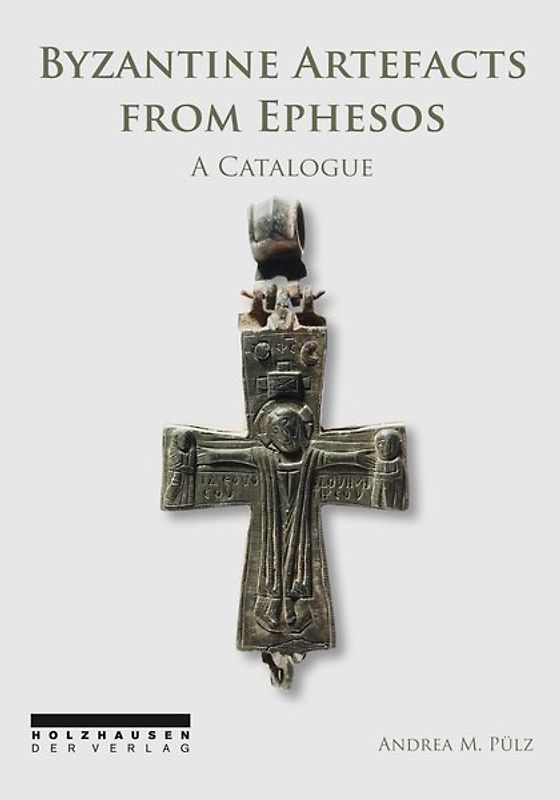
Byzantine Artefacts from Ephesos
Andrea M. Pülz (Taschenbuch, Englisch)
★★★★★
☆☆☆☆☆ Keine Bewertungen vorhanden
Optischer Zustand
Beschreibung
An overview of the urban history reveals that Ephesos successively recovered after the earthquake destructions of the 3rd and 4th centuries and developed again into a vibrant metropolis of Asia Minor after the end of the 4th century. Urban life thereby was increasingly concentrated in the former lower city of imperial times, within which numerous prestigious domestic residences grew up after the… late 4th and into the 5th century in the region of the Harbour Gymnasium and the Halls of Verulanus, the so-called Byzantine Palace (= Bishop’s Palace) and the Church of St. Mary (= Bishop’s Church). Furthermore, more than 15 church buildings should also be mentioned which, distributed throughout the ancient civic region, were erected in the Early Byzantine period. In addition, the international importance of Ephesos as a centre of pilgrimage should be noted; this promoted the economic advancement of the city. At the end of the 6th/beginning of the 7th century, a new city wall circuit was eventually laid out, which however no longer surrounded the entire civic area but instead only the buildings in the lower city (Bishop’s Church and Palace, domestic structures along the Arcadiane, Theatre, Stadium). The buildings which now lay outside the city walls, such as those along the Curetes Street, at the Upper Agora or also the Terrace Houses, were often converted into workshops (workshops for potteries, for non-ferrous metals or for stonemasons as well as flour mills), lending a sort of suburban character to the respective urban areas.
After the 7th/8th centuries, there was apparently no homogeneous urban framework in Ephesos anymore; instead, a village-like settlement structure was rather the case, one which extended over the former urban area. Settlement phases dating to the 7th–9th centuries are, for example, attested in the Vedius Gymnasium, which at this time was used for simple residential purposes. Medieval building phases are, however, also found in the region of the Early Byzantine residences which lay on top of the Halls of Verulanus, namely the Late Antique-Medieval City Quarter south of the Church of St. Mary, as well as within the so-called Byzantine Palace. In addition, here a lime kiln dating to the 10th century and a small burial ground against the southern nave wall of the Palace Chapel could have been identified, which was in use from the Early Byzantine period until the 14th century. Equally, a continuous usage up until the Late Byzantine period is documented for the graves in and around the Church of St. Mary; these in part contained valuable grave goods such as earrings and finger rings of non-ferrous and precious metals, glass bracelets, and crosses. Dieses Produkt haben wir gerade leider nicht auf Lager.
Handgeprüfte Gebrauchtware
Bis zu 50 % günstiger als neu
Der Umwelt zuliebe
Technische Daten
Erscheinungsdatum
12.09.2017
Sprache
Englisch
EAN
9783903207028
Herausgeber
Holzhausen Verlag
Sonderedition
Nein
Autor
Andrea M. Pülz
Seitenanzahl
62
Einbandart
Taschenbuch
Buch Untertitel
A Catalogue
Schlagwörter
Ephesos, Pülz, Kleinfunde, Ladstätter, Kreuz, Byzantine Artefacts
Thema-Inhalt
NKD - Archäologie einer Periode / Region
GLK - Bibliothek: Bibliografische Zuordnung, Katalogisierung, Klassifikation
GBCR - Bibliografien, Kataloge
Thema-Zusatz
Türkei, Altes Griechenland, Byzantinisches Reich, Antiker griechischer Stil, Byzantinischer Stil
Höhe
240 mm
Breite
18 cm
-.-
★★★★★
☆☆☆☆☆ Leider noch keine Bewertungen
Leider noch keine Bewertungen
Sicher bei rebuy kaufen

Schreib die erste Bewertung für dieses Produkt!
Wenn du eine Bewertung für dieses Produkt schreibst, hilfst du allen Kund:innen, die noch überlegen, ob sie das Produkt kaufen wollen. Vielen Dank, dass du mitmachst!
Sicher bei rebuy kaufen