
iPhoneAlle anzeigen
iPhone 11iPhone 11 ProiPhone 11 Pro MaxiPhone 12iPhone 12 ProiPhone 12 Pro MaxiPhone 12 miniiPhone 13iPhone 13 ProiPhone 13 Pro MaxiPhone 13 miniiPhone 14iPhone 14 PlusiPhone 14 ProiPhone 14 Pro MaxiPhone 15iPhone 15 PlusiPhone 15 ProiPhone 15 Pro MaxiPhone 16iPhone 16 PlusiPhone 16 ProiPhone 16 Pro MaxiPhone 16eiPhone 8iPhone 8 PlusiPhone SE 2020iPhone SE 2022iPhone XiPhone XRiPhone XSiPhone XS Max
Galaxy A-SerieAlle anzeigen
Galaxy A12Galaxy A13Galaxy A13 5GGalaxy A14Galaxy A15Galaxy A16Galaxy A17 5GGalaxy A20eGalaxy A21Galaxy A22Galaxy A23Galaxy A24Galaxy A25Galaxy A26 5GGalaxy A32Galaxy A33Galaxy A34Galaxy A35Galaxy A36 5GGalaxy A40Galaxy A41Galaxy A42Galaxy A50Galaxy A51Galaxy A52Galaxy A53Galaxy A54Galaxy A55Galaxy A56 5GGalaxy A70Galaxy A71Galaxy A72
Redmi SeriesAlle anzeigen
Redmi 10Redmi 13CRedmi 15 5GRedmi Note 10Redmi Note 10 ProRedmi Note 11Redmi Note 11 ProRedmi Note 11 Pro Plus 5GRedmi Note 11sRedmi Note 12Redmi Note 12 5GRedmi Note 12 ProRedmi Note 12 Pro 5GRedmi Note 12 Pro PlusRedmi Note 13Redmi Note 13 5GRedmi Note 13 ProRedmi Note 13 Pro PlusRedmi Note 14Redmi Note 14 Pro PlusRedmi Note 8Redmi Note 8 ProRedmi Note 9Redmi Note 9 Pro
- Startseite
Bücher Englische Bücher Recent Trends and New Directions in Ethnomusicology
Derzeit nicht verfügbar
Handgeprüfte Gebrauchtware
Bis zu 50 % günstiger als neu
Der Umwelt zuliebe
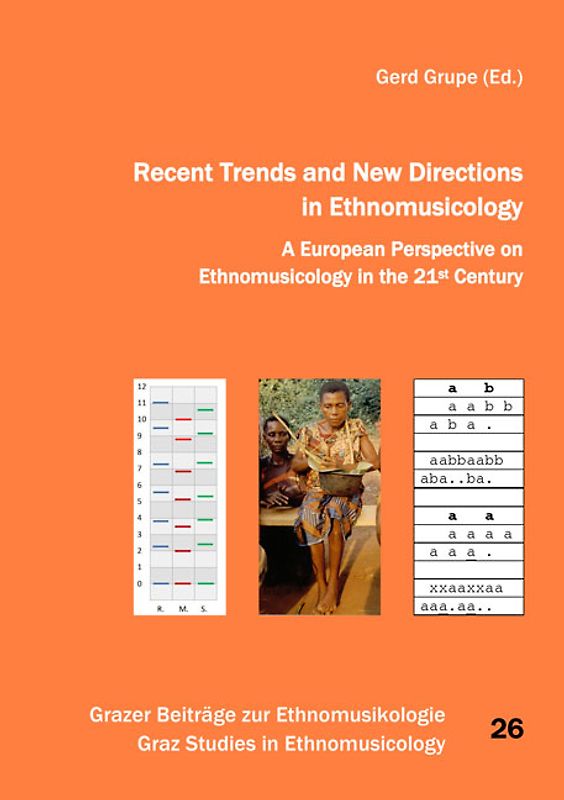
Recent Trends and New Directions in Ethnomusicology
Gerd Grupe (Gebundene Ausgabe, Englisch)
★★★★★
☆☆☆☆☆ Keine Bewertungen vorhanden
Optischer Zustand
Beschreibung
Based mostly on contributions to a lecture series hosted by the Institute of Ethnomusicology at the University of Music and Performing Arts Graz/Austria in 2018, this volume presents papers addressing Recent Trends and New Directions in Ethnomusicology from a European perspective. In order to do so an effort has been made to include authors from a wide range of European countries. In these papers… major issues and topics shaping current ethnomusicological discourse are assessed. Thus, the topics covered in this volume include methodological considerations, insights into or from neighboring fields, various case studies, and more.
In “Potato Music Revisited and the Rise of a Worldly Music Studies: Perspectives from the UK” Henry Stobart presents a reassessment of the fundamental rejection of ethnomusicology as put forth by UK musicologist Harper-Scott. Ignazio Macchiarella, in his chapter on “Ethnomusicology as a Dialogue: Current Research in Sardinia”, by drawing on his own experiences during field research he carried out in Sardinia over many years, describes a dialogical approach as both an ethical requirement and a powerful tool for our investigations and studies. Sílvia Martínez’s piece “Mainstream Popular Music as a Challenge to Gender Studies: Latin Music and Feminism in Contemporary Spain” not only combines two issues highly topical in current ethnomusicology, i.e., gender and popular music. She also does so by investigating a kind of music, reggaeton, known for its particularly provocative and often openly offensive and sexist lyrics and visual representations. Catherine Foley, in her “Identity Matters: Irish Ethnochoreology and Ethnomusicology”, addresses a topic which has been characterized as the presumably most important function of music, i.e., identity, and vividly highlights the importance of dance in this context – a domain which very often has not received its due attention in ethnomusicological studies. Reaching out to neighboring fields and disciplines also characterizes the approach of Raymond Ammann and Michael Praxmarer. In their paper entitled “Cognitive Music Archaeology, a New Trend in Ethnomusicology: Interdisciplinary Research on Paleolithic Musical Instruments” they stress such collaboration beyond established boundaries. By employing current technological developments they seek to arrive at new insights into the prehistory of music-making tools.
Can anything be gained from musical analysis at all and, if yes, how can we achieve a culturally informed one? In the present volume three contributions can be said to aim at contributing to this general endeavor. Susanne Fürniss, in “Anthropological and Historical Resources of Music Analysis”, looks at several music traditions in Central Africa and contextualizes their investigation in relation to the emergence of a “French school of African[ist] ethnomusicology”. Based on long-term field studies, emic views complementing our scholarly interpretations of what we have observed, lead to a better understanding of underlying concepts and actual practices. In his paper on “The Significance of Interactive Analysis in Understanding the Emic Perception of Musical Structures: The Case of South Iranian Bagpipe Music”, which is also based on extensive fieldwork, Babak Nikzat outlines local concepts about tunings and scales among musicians in southern Iran. Since these models mostly have to be derived from the musicians’ tacit knowledge specific research strategies need to be applied. The volume closes with an account of a case study which Gerd Grupe conducted on Central Javanese gamelan music. “Music aesthetics, idiomatic performance practice, dialogue, and two modes of discourse” all come into play here, thus to some extent tying in with issues addressed in earlier chapters. The paper traces potential ways of elucidating aesthetic concepts and preferences of gamelan musicians in a dialogic fashion incorporating computer-based research methods. Dieses Produkt haben wir gerade leider nicht auf Lager.
Handgeprüfte Gebrauchtware
Bis zu 50 % günstiger als neu
Der Umwelt zuliebe
Technische Daten
Erscheinungsdatum
04.12.2019
Sprache
Englisch
EAN
9783844070538
Herausgeber
Shaker
Serien- oder Bandtitel
Grazer Beiträge zur Ethnomusikologie /Graz Studies of Ethnomusicology
Sonderedition
Nein
Autor
Gerd Grupe
Seitenanzahl
258
Auflage
1
Einbandart
Gebundene Ausgabe
-.-
★★★★★
☆☆☆☆☆ Leider noch keine Bewertungen
Leider noch keine Bewertungen
Sicher bei rebuy kaufen

Schreib die erste Bewertung für dieses Produkt!
Wenn du eine Bewertung für dieses Produkt schreibst, hilfst du allen Kund:innen, die noch überlegen, ob sie das Produkt kaufen wollen. Vielen Dank, dass du mitmachst!
Sicher bei rebuy kaufen