
iPhoneAlle anzeigen
iPhone 11iPhone 11 ProiPhone 11 Pro MaxiPhone 12iPhone 12 ProiPhone 12 Pro MaxiPhone 12 miniiPhone 13iPhone 13 ProiPhone 13 Pro MaxiPhone 13 miniiPhone 14iPhone 14 PlusiPhone 14 ProiPhone 14 Pro MaxiPhone 15iPhone 15 PlusiPhone 15 ProiPhone 15 Pro MaxiPhone 16iPhone 16 PlusiPhone 16 ProiPhone 16 Pro MaxiPhone 16eiPhone 8iPhone 8 PlusiPhone SE 2020iPhone SE 2022iPhone XiPhone XRiPhone XSiPhone XS Max
Galaxy A-SerieAlle anzeigen
Galaxy A12Galaxy A13Galaxy A13 5GGalaxy A14Galaxy A15Galaxy A16Galaxy A17 5GGalaxy A20eGalaxy A21Galaxy A22Galaxy A23Galaxy A24Galaxy A25Galaxy A26 5GGalaxy A32Galaxy A33Galaxy A34Galaxy A35Galaxy A36 5GGalaxy A40Galaxy A41Galaxy A42Galaxy A50Galaxy A51Galaxy A52Galaxy A53Galaxy A54Galaxy A55Galaxy A56 5GGalaxy A70Galaxy A71Galaxy A72
Redmi SeriesAlle anzeigen
Redmi 10Redmi 13CRedmi 15 5GRedmi Note 10Redmi Note 10 ProRedmi Note 11Redmi Note 11 ProRedmi Note 11 Pro Plus 5GRedmi Note 11sRedmi Note 12Redmi Note 12 5GRedmi Note 12 ProRedmi Note 12 Pro 5GRedmi Note 12 Pro PlusRedmi Note 13Redmi Note 13 5GRedmi Note 13 ProRedmi Note 13 Pro PlusRedmi Note 14Redmi Note 14 Pro PlusRedmi Note 8Redmi Note 8 ProRedmi Note 9Redmi Note 9 Pro
- Startseite
Bücher Wissen & Bildung Sozialwissenschaft, Recht, Wirtschaft Medien & Kommunikation Buchhandel & Bibliothekswesen Mariano Taccola – De Machinis
Derzeit nicht verfügbar
Handgeprüfte Gebrauchtware
Bis zu 50 % günstiger als neu
Der Umwelt zuliebe
Optischer Zustand
Beschreibung
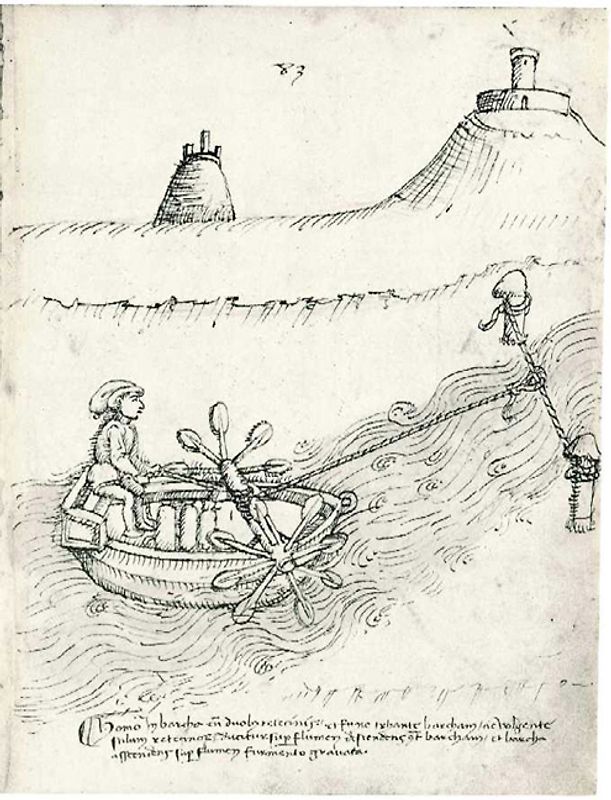
Writing about engineering went through one of its decisive stages, on the way from the ancient treatise to the modern textbook, during the 15th century. Mariano Taccola of Siena is a key figure in this development, and his “De Machinis” of 1449 culminates a lifetime devoted to the composition of countless engine drawings and technical texts. It is a record of machines for civil and military… engineering, hydraulics, mills and tunnels. The autograph “De Machinis” was only recently discovered. With remarkable ingenuity and realistic force, Taccola clarified the complex form of engines in optical unity perhaps for the first time. His originality of mind and artistic skill also led him to formulate devices for interconnecting drawings and texts and to classify engines. Taccola became famous; the Sienese nicknamed him Archimedes. He was secretary at the leading institution of learning, the “Studio” of Siena. He met King Sigismund and was named “comes palatinus”. He showed his drawings only to a selected few, among them Brunelleschi, with whom he discussed engineering questions. He experimented in technology to develop new and improved machines. Taccola’s „De Machinis“, which owes some parts to Vegetius, may have been insprired by Kyeser’s “Bellifortis” but surpasses it in artistic refinement. “De Machinis” is a compendium of engines. It illustrates the tradtions of the early 15th century in Italy as the Middle Ages fade away. In the Renaissance, the manuscripts were known to artists, yielding material of technical knowledge to Francesco di Giorgio Martini, the Ghiberti, Leonardo da Vinci and other men. Illustrious persons in history collected the manuscripts, beginning with the “condottiere” Bartolomeo Colleoni, the Turkish rulers in Constantinople who may have had one from Sigismondo Malatesta, the Nani of Venice and Andrea Tessier of Venice, Heinrich Count Daun, and Count Wilczek. The first part of ths edition considers Taccola’s life, the composition of his book, and the whereabouts of Taccola as he composed “De Machinis”. Another part is a description and history of the autograph and of each of its copies. The edition includes a technical and stylistic commentary about Taccola’s engine drawings and texts, and it is accompanied by a transcription of the Latin texts. This facsimile edition of “De Machinis”, which uses folios from manuscript copies when pages are missing from the autograph, is a reconstruction of the original form. “De Machinis” in copy form was rediscovered in 1797, along with Leonardo’s engineering work, by Giambattista Venturi, a century after a French ambassador acquired the copy for the royal library in Paris. During this time and later the autograph was treasured by its owner in Austria, who was unaware that scholars were searching for the original Taccola. The adventures and sojourn of the manuscript in Italy and Austria came to an end when it was aquired by the Bayerische Staatsbibliothek in Munich. Dieses Produkt haben wir gerade leider nicht auf Lager.
Handgeprüfte Gebrauchtware
Bis zu 50 % günstiger als neu
Der Umwelt zuliebe
Technische Daten
Erscheinungsdatum
01.01.1971
Sprache
Deutsch
EAN
9783920153056
Herausgeber
Reichert, L
Sonderedition
Nein
Seitenanzahl
404
Einbandart
Gebundene Ausgabe
Einbandart Details
Leinen (ohne Verstärkung)
Buch Untertitel
Faksimile des Codex Latinus Monacensis 28800, Teil II. in der Bayerischen Staatsbibliothek München
Schlagwörter
Architektur, Bibliophile Ausgaben, Buch, Buchmalerei, Buch- und Bibliothekswissenschaft, Geschichte, Handschrift, Ikonographie, Italien, Kulturwissenschaft, Kunstgeschichte, Mariano, Taccola, Neuere Geschichte, Presse, Renaissance, Technik, Technikgeschichte, Wissenschaftsgeschichte, Zeichnung
Thema-Inhalt
NHAP - Geschichtsforschung: Quellen
AFF - Zeichnen und Zeichnungen
DND - Tagebücher, Briefe, Notizbücher
TBX - Technikgeschichte
DSBC - Literaturwissenschaft: 1400 bis 1600 (Renaissance / Humanismus)
AMX - Geschichte der Architektur
Thema-Zusatz
Italien, 15. Jahrhundert (ca. 1400 bis ca. 1499)
Höhe
305 mm
Breite
22.5 cm
Hersteller: Dr. Ludwig Reichert Verlag Inhaberin Ursula Reichert, Tauernstraße 11, Wiesbaden, Deutschland, 65199, info@reichert-verlag.de, Ursula Reichert
-.-
★★★★★
☆☆☆☆☆ Leider noch keine Bewertungen
Leider noch keine Bewertungen
Sicher bei rebuy kaufen

Schreib die erste Bewertung für dieses Produkt!
Wenn du eine Bewertung für dieses Produkt schreibst, hilfst du allen Kund:innen, die noch überlegen, ob sie das Produkt kaufen wollen. Vielen Dank, dass du mitmachst!
Sicher bei rebuy kaufen