
iPhoneAlle anzeigen
iPhone 11iPhone 11 ProiPhone 11 Pro MaxiPhone 12iPhone 12 ProiPhone 12 Pro MaxiPhone 12 miniiPhone 13iPhone 13 ProiPhone 13 Pro MaxiPhone 13 miniiPhone 14iPhone 14 PlusiPhone 14 ProiPhone 14 Pro MaxiPhone 15iPhone 15 PlusiPhone 15 ProiPhone 15 Pro MaxiPhone 16iPhone 16 PlusiPhone 16 ProiPhone 16 Pro MaxiPhone 16eiPhone 8iPhone 8 PlusiPhone SE 2020iPhone SE 2022iPhone XiPhone XRiPhone XSiPhone XS Max
Galaxy A-SerieAlle anzeigen
Galaxy A12Galaxy A13Galaxy A13 5GGalaxy A14Galaxy A15Galaxy A16Galaxy A17 5GGalaxy A20eGalaxy A21Galaxy A22Galaxy A23Galaxy A24Galaxy A25Galaxy A26 5GGalaxy A32Galaxy A33Galaxy A34Galaxy A35Galaxy A36 5GGalaxy A40Galaxy A41Galaxy A42Galaxy A50Galaxy A51Galaxy A52Galaxy A53Galaxy A54Galaxy A55Galaxy A56 5GGalaxy A70Galaxy A71Galaxy A72
Redmi SeriesAlle anzeigen
Redmi 10Redmi 13CRedmi 15 5GRedmi Note 10Redmi Note 10 ProRedmi Note 11Redmi Note 11 ProRedmi Note 11 Pro Plus 5GRedmi Note 11sRedmi Note 12Redmi Note 12 5GRedmi Note 12 ProRedmi Note 12 Pro 5GRedmi Note 12 Pro PlusRedmi Note 13Redmi Note 13 5GRedmi Note 13 ProRedmi Note 13 Pro PlusRedmi Note 14Redmi Note 14 Pro PlusRedmi Note 8Redmi Note 8 ProRedmi Note 9Redmi Note 9 Pro
- Startseite
Bücher Englische Bücher Wissen & Bildung Geisteswissenschaft, Kunst, Musik Philosophie Östliche Philosophie The Self's Awareness of Itself
Derzeit nicht verfügbar
Handgeprüfte Gebrauchtware
Bis zu 50 % günstiger als neu
Der Umwelt zuliebe
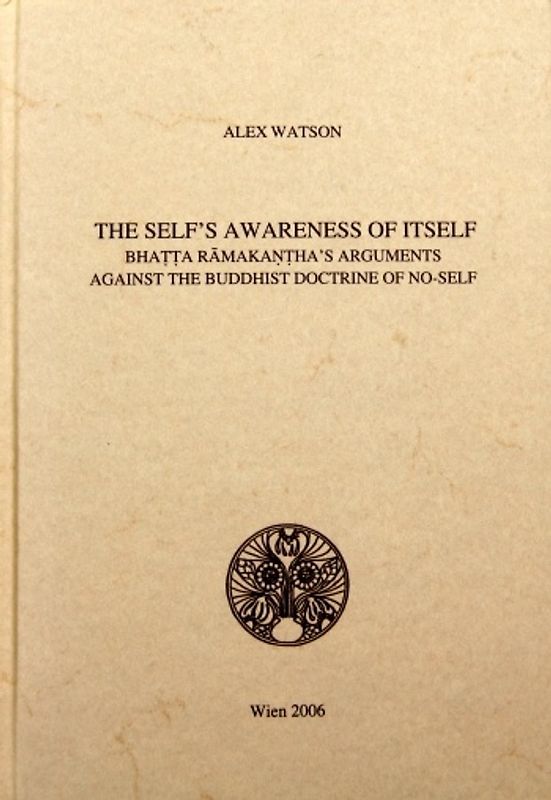
The Self's Awareness of Itself
Alex Watson (Gebundene Ausgabe, Englisch)
★★★★★
☆☆☆☆☆ Keine Bewertungen vorhanden
Optischer Zustand
Beschreibung
The central debate between Buddhism and the Brahmanical schools is that concerning the existence or non-existence of a 'Self' (atman). The possibility of attaining liberation (moksa, nirvana), the highest aim of Indian soteriologies, is said by both sides to depend on the stance one takes on this question. This book introduces scholars and students of Indian Philosophy to the Śaiva Siddhanta voice… in this debate.
It presents the arguments of Bhatta Ramakantha (c. 950_1000 AD, from Kashmir), the principal exegete of early Śaiva Siddhanta, for the existence of the Self. Of his eight surviving texts only the first chapters of his commentary on the Kiranatantra have been translated from the Sanskrit, or begun to be studied seriously. That commentary expounds one of the scriptures of the tradition primarily for the benefit of those within it; whereas the writings of his examined in this book look without to the wider philosophical discourse of the time, in which Śaiva Siddhanta was only a marginal voice. They attempt to locate Śaiva Siddhanta within that discourse by taking on in debate a series of interlocutors from other traditions, in particular Buddhism, Nyaya, Vaiśesika and Sankhya.
The text on which this book draws most is the Nareśvarapariksprakaśa (NPP), followed by the Matangavtti and the Paramoksanirasakarikavtti. Sanskrit passages from these texts are here edited, annotated with variant readings and parallel passages, and translated. Watson then gives a thorough commentary that seeks both to alert the reader to what would not necessarily be clear from the translation alone, and to relate the particular point being made to Ramakantha's wider system and to the earlier history of Indian philosophy.
The Introduction describes the different Buddhist and Brahmanical positions in the Buddhist-Brahmanical atman debate; the relationship of the Nareśvarapariksprakaśa to earlier Śaiva Siddhanta texts; and the relationship of Rama¬kan¬tha's views to those of other philosophical traditions, with particular focus on Nyaya, Vaiśesika and Sankhya. Next a synopsis of the first chapter of the Nareśvarapariksprakaśa is given. Three of the four main chapters present Ra¬ma¬kantha's answers to the following questions: Can we infer the exitence of the Self? Can We Know the Self Through Self-Awareness (svasamvedana)? Can We Perceive the Self Through I-Cognition (ahampratyaya)? The fourth examines Ramakantha's account of the relationship between Self and cognition.
Watson demonstrates how, as a strategy to undermine Buddhist arguments, a Śaiva Siddhantin author creatively assimilated certain features of Buddhism, thereby strengthening his own armoury, and then used these to overcome those other features of Buddhism that conflicted with the core essentials of his own tradition. This is perhaps the first detailed study of the philosophy of early Śaiva Siddhanta, and it shows that this tradition contains many original and sophisticated arguments. Dieses Produkt haben wir gerade leider nicht auf Lager.
Handgeprüfte Gebrauchtware
Bis zu 50 % günstiger als neu
Der Umwelt zuliebe
Technische Daten
Erscheinungsdatum
01.01.2006
Sprache
Englisch
EAN
9783900271381
Herausgeber
Sammlung de Nobili
Serien- oder Bandtitel
Publications of the De Nobili Research Library
Sonderedition
Nein
Autor
Alex Watson
Seitenanzahl
433
Auflage
1
Einbandart
Gebundene Ausgabe
Buch Untertitel
Bhatta Ramakanthas's Arguments against the Buddhist Doctrine of No-Self
Bandzählung
32
Schlagwörter
Shivaismus, Selbstbewußtsein, Buddhismus, Kashmir, Bhatta Ramakantha
Thema-Inhalt
QDH - Philosophische Traditionen und Denkschulen
QRD - Hinduismus
-.-
★★★★★
☆☆☆☆☆ Leider noch keine Bewertungen
Leider noch keine Bewertungen
Sicher bei rebuy kaufen

Schreib die erste Bewertung für dieses Produkt!
Wenn du eine Bewertung für dieses Produkt schreibst, hilfst du allen Kund:innen, die noch überlegen, ob sie das Produkt kaufen wollen. Vielen Dank, dass du mitmachst!
Sicher bei rebuy kaufen