
iPhoneAlle anzeigen
iPhone 11iPhone 11 ProiPhone 11 Pro MaxiPhone 12iPhone 12 ProiPhone 12 Pro MaxiPhone 12 miniiPhone 13iPhone 13 ProiPhone 13 Pro MaxiPhone 13 miniiPhone 14iPhone 14 PlusiPhone 14 ProiPhone 14 Pro MaxiPhone 15iPhone 15 PlusiPhone 15 ProiPhone 15 Pro MaxiPhone 16iPhone 16 PlusiPhone 16 ProiPhone 16 Pro MaxiPhone 16eiPhone 8iPhone 8 PlusiPhone SE 2020iPhone SE 2022iPhone XiPhone XRiPhone XSiPhone XS Max
Galaxy A-SerieAlle anzeigen
Galaxy A12Galaxy A13Galaxy A13 5GGalaxy A14Galaxy A15Galaxy A16Galaxy A17 5GGalaxy A20eGalaxy A21Galaxy A22Galaxy A23Galaxy A24Galaxy A25Galaxy A26 5GGalaxy A32Galaxy A33Galaxy A34Galaxy A35Galaxy A36 5GGalaxy A40Galaxy A41Galaxy A42Galaxy A50Galaxy A51Galaxy A52Galaxy A53Galaxy A54Galaxy A55Galaxy A56 5GGalaxy A70Galaxy A71Galaxy A72
Redmi SeriesAlle anzeigen
Redmi 10Redmi 13CRedmi 15 5GRedmi Note 10Redmi Note 10 ProRedmi Note 11Redmi Note 11 ProRedmi Note 11 Pro Plus 5GRedmi Note 11sRedmi Note 12Redmi Note 12 5GRedmi Note 12 ProRedmi Note 12 Pro 5GRedmi Note 12 Pro PlusRedmi Note 13Redmi Note 13 5GRedmi Note 13 ProRedmi Note 13 Pro PlusRedmi Note 14Redmi Note 14 Pro PlusRedmi Note 8Redmi Note 8 ProRedmi Note 9Redmi Note 9 Pro
- Startseite
Bücher Englische Bücher Wissen & Bildung Naturwissenschaft, Medizin, Informatik, Technik Geowissenschaft Stadt-, Raum- und Landschaftsplanung Planning in Germany and Iran - Responding to Challenges of Climate Change through Intercultural Dialogue
Derzeit nicht verfügbar
Handgeprüfte Gebrauchtware
Bis zu 50 % günstiger als neu
Der Umwelt zuliebe
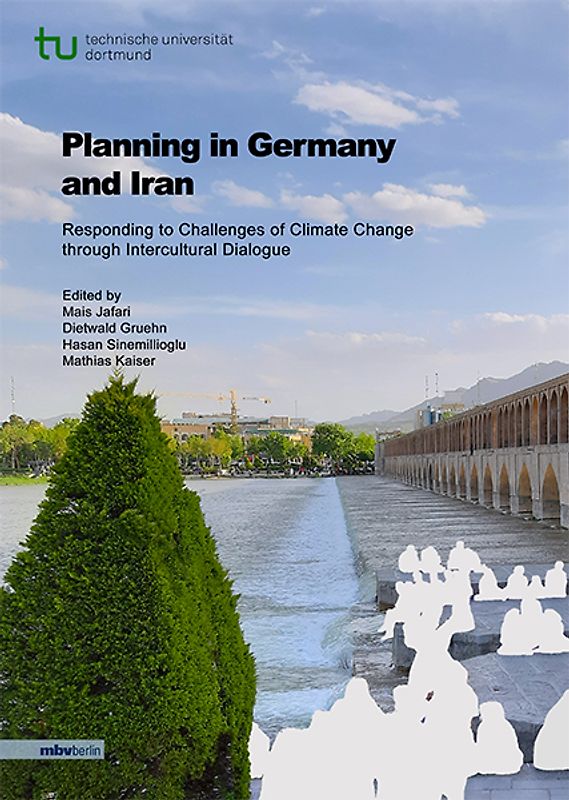
Planning in Germany and Iran - Responding to Challenges of Climate Change through Intercultural Dialogue
(Broschiert, Englisch)
★★★★★
☆☆☆☆☆ Keine Bewertungen vorhanden
Optischer Zustand
Beschreibung
Since 2015, the Chair of Landscape Ecology and Landscape Planning at TU Dortmund University (TUDO) and the Daneshpajoohan Pishro Higher Education Institute (DHEI) have been cooperating closely by exchange visits of scientists from both universities, development of graduate and undergraduate courses, and joint supervision of PhD and MSc students. Since 2017, a MoU has been signed between the two… universities. The intercultural dimension has been significantly intensified by the recent joint research project “Planning in Germany and Iran: Responding to Challenges of Climate Change through Intercultural Dialogue”, funded by the German Academic Exchange Services (DAAD).
The impact of climate change on human health, the built environment, and economic development is a topic of great interest today, especially in Germany and Iran, which experience and contribute to climate change in different ways. Iran is experiencing rapid emographic growth and increasing fossil fuel consumption. Human activities and cultural behaviors have also contributed to climate change and its impacts, which go far beyond a rise in temperature and affect water, air, energy, transportation, ecosystems, human health, and social equity. As a resource-rich country with vast oil and gas reserves and as fourth-largest oil-producing country in the world, Iran is among the top ten emitters of greenhouse gases (GHG). Nevertheless, Iran has significant renewable energy potential, but political sanctions have severely impacted Iran's economy and inflation rate, disrupted oil exports, and slowed the transition to a cleaner energy system.
The three-year DAAD funded research project (2019 - 2021) addresses the above climate change challenges and adaptation measures in Iran, as well as urban and rural cultural and natural heritage at local and regional levels, linking them to historical contexts through spatial planning approaches. Aside from the fact that climate change is an important issue, the topics of this research project were chosen because they are universal problems and a common understanding can be developed across national, ideological or religious differences. Thus, the cultural dialogue in this project has created cross-cultural experiences and an understanding of common scientific interests upon which a strong foundation for teaching, research, and future collaboration has been built.
In addition to the research component of addressing the challenges of climate change, the cooperation between the TUDO and DHEI aims at improving the teaching quality, research knowledge, and international communication skills of young academics. The work presented in this book is the joint effort of researchers from different academic degrees from both universities, including assistant professors, postdoctoral fellows, doctoral students, master's students, and bachelor's students. The academic dialogue through the various project activities at both universities has enabled knowledge exchange and led to the expansion of the project team, which includes more than 70 members from both universities and partner universities and research institutes. The writing of these papers has been developed through joint meetings, training on university didactics and research methodology, seminars in the form of co-teaching, and linking young academics to regional and international research networks at both universities.
Planning Network Middle East is an initiative of TU Dortmund University, which currently takes place informally and in the form of individual cooperation between TUDO and their respective partners in the Middle East. The establishing of teaching and research networks between DHEI and other Iranian universities and linking them with the existing partner universities of TUDO, especially in Iraq, Universities of Duhok and Mosul, was established in this research project and is a long-term goal of this project. The ultimate goal is to establish an association, the Planning Network Middle East, as a regional instrument to ensure that the cooperation is not only understood as a bilateral link between Germany and the partner university, but a multi-layered networking between all partner universities involved. The various existing collaborations between TU Dortmund University and universities in the Middle East provide an excellent basis for further development of cooperation activities such as curriculum development workshops and planning of conferences, publications, etc.
The research on the multidimensionality of climate change challenges and climate adaptation and mitigation measures in Iran is presented in the contributions of this book. The papers included in the following four parts present environmental, urban, social, and architectural approaches to responding to climate change challenges in Iran in general and in Esfahan in particular. These peer-reviewed papers reflect the intensive inter-and transdisciplinary collaboration between the project members of the TU Dortmund University and DHEI and its Iranian partner universities such as Tarbiat Modares University (TMU)/Tehran, Sheikh Bahaei University/Esfahan, and Yazd University/Yazd. The papers were produced over two years of joint workshops, research visits, spring and winter schools, and a training program at TUDO.
They were also presented at the project conference in 2020, "10th International Conference on Sustainable Development and Urban Construction".
The book parts are described below.
1. Environmental Approaches to Climate Change Challenge
The papers of this section focus on the Identification of climate change in Zayanderud Watershed based on the Köppen-Geiger method and IPCC scenarios. The Köppen-Geiger climate maps within the Zayandehrud watershed on a 0.5-degree grid are calculated for three quarter-century periods from 2001 to 2100. In addition, scenarios of the Zayandehrud watershed are accordingly concluded, and the various parts of Zayanderud watershed are diagnosed to experience different climatic effects ranging from warming and desertification at the upstream and downstream of the watershed to extreme warming as in the snow-capped mountainous headwaters of the Zayandehrud watershed. The same method is further applied in this section to study the climate classification in Zayandehrud watershed stations. Effect of climate parameters on surface and groundwater resources upstream of Zayandehrud watershed are also examined in this part. Further investigation on the relationship between climatic parameters and their effect on surface and groundwater resources upstream of the Zayandehrud watershed is presented in this part. Scenarios about the future of renewable energy resources under the current rapidly increasing climate change are also discussed in this part. Hydropower generation is one of the most significant sustainable technologies in renewable energy production in Iran. Nevertheless, in this part, it is argued that hydropower will lose its position as one of the leading technologies in energy production compared to the past if the recent 50-year development trend continues and the annual rainfall in Iran decreases by 2.5% by 2100.
2. Urban Approaches to Climate Change Challenge
Urban resilience is one of the most important strategies to solve the challenge of climate change in cities. As such, Iran is particularly exposed to the challenges of climate change. This section begins with a review of the literature on urban resilience and climate resilience in an attempt to establish a working definition of urban climate resilience in Esfahan. This concept is further evaluated through the analysis of the built environment in the Naghshe Jahan district of Esfahan. Especially in historical centers, the integration of a pedestrian-oriented street network as a section of a green structure is one of the important urban design solutions to reduce the impacts of climate change. In Esfahan, the historic area during the Seljuk and Safavid periods and the natural greenways are proposed as a potential for creating green pedestrian streets and therefore overlapping and combining two concepts of pedestrian-streets and green structure. National and international documents and reports on climate change Iran and the world in relation to the goals and strategies to respond to climate change have been studied in this chapter with an emphasis on some main topics include goals, principles, commitments, approaches, organizations involved, strategies, processes and enforcement measures in Iran and the world due to climate change. The UN Habitat's City Resilience Profiling Tools has been applied in the last article in this section to assess Esfahan's resilience as it combines climate-related risks through a holistic analysis of the physical, organizational, functional, and social environment. Aligned with the contents of this section, the final paper studies the conceptual models of urban sustainability and green infrastructure in Pakistan in order to improve and enhance the performance of the environmental system.
3. Social Approaches to Climate Change Challenge
Social resilience is the ability of a society to cope with disruption and change. It includes communities' ability to self-organize, reduce stress, and increase their capacity to learn and adapt. A resilient society is able to respond positively to change and stress and maintain its core functions as a society. The contributions in this section focus on the relationship between climate change and social resilience. It begins with tracing the historical and social development of Zoroastrians after Timur Gurkhani's invasion of Iran. It is explained how the migration of Zoroastrians from the northeastern regions to the central region of Iran (Yazd), acceptance of laws to preserve the religion and customs of Zoroaster and redesigning the homes to have religious parts were the main strategies to resilience and how this could be reflected on climate resilience.Child-centered social resilience is examined in in this section in relation to the built environment and urban design in Esfahan. The Zayanderud River is furthermore reintroduced not only as an essential natural element in the city with its environmental conditions and value as in section two, but also from a social point of view. In this section, the mutual effects of climate change on human behavior in the city of Esfahan along the Zayanderud River in two main periods when the river is dry and when it carries water are examined, and the emerging behaviors of people due to the drought of the river are analyzed. Finally, the impact of climate change on physical and mental health has been further elaborated in this section. Thus, analyzing the relationship between social resilience and social health to reduce the negative impacts of climate change, especially air pollution.
4. Architectural Approaches to Climate Change Challenge
Given the high energy consumption in Iran, especially in buildings, the issue of climate resilience in architecture and building design has been raised. This section focuses on the application of traditional architectural principles, especially in hot and dry climates, in relation to resilience in Esfahan. The contributions in this section aim to answer the following questions: How has the traditional architecture of Esfahan withstood the adverse climatic conditions of its time; How well is the contemporary architecture of Esfahan adapted to the current climatic parameters; and to what extent is it adaptable to the predicted climatic changes? Mapping of different elements of houses of the traditional architecture of Esfahan, such as Abbasian house, Boroujerdi house in Kashan, Dehdashti house in Esfahan, and contemporary Iranian houses, such as house No. 7, Nazhvan garden house, square house, Jay Shir residential house and Rosen residential house in Esfahan are analyzed. Esfahan's contemporary architecture is studied, and effective approaches in modern architectural design are presented, which are the proper utilization of traditional architectural elements and methods to adapt to new climatic conditions. The last paper of this section the environmental characteristcs of the Parian gardens and their abilty to adopt to climate conditions of the different climatic regions. Dieses Produkt haben wir gerade leider nicht auf Lager.
Handgeprüfte Gebrauchtware
Bis zu 50 % günstiger als neu
Der Umwelt zuliebe
Technische Daten
Erscheinungsdatum
15.06.2021
Sprache
Englisch
EAN
9783967290950
Herausgeber
Mensch & Buch
Sonderedition
Nein
Seitenanzahl
458
Auflage
1
Einbandart
Broschiert
Einbandart Details
Klebebindung
Schlagwörter
Climate Change, Dehdashti house, Urban Approaches, Air Pollution, Hydroelectric Power Plants, Water climate change, Raumplanung, Landscape Ecology, Climate Resilient Constructions, Adaptive Building Strategies, climate, Climate Resilience, CRPT Approach, Green Infrastructure, dapting existing buildings to climate change, house number 7, Spatial Planning, IPCC scenarios, Building Architecture in Relation to Global Climate Change, Green Structure, Climate Change Challenges, Abbasian House of Kashan, Climate-Responsive Design, Pedestrian-based Street Network, Social Resilience, Social Approaches, Zayandehrud, Landschaftsplanung, Köppen-Geiger Method, effects of climate change, Water Resources, Deutschland, Naghshe Jahan District, cities climate change, intercultural dialogue between Iran and Germany, Landscape Planning, Urban Rivers, Child-Centered Social Resilience, Iranian Traditional Gardens, Climate Parameters, environment Approaches, Esfahan Historical Context, climate change, Public Health, Zayandehrud Watershed Stations, Esfahan, Urban Climate Resilience, Iran, Sustainable Energy, environmental influences, Challenges of Climate Change, Landschaftsökologie, Effects of Climate Parameters, Germany, Architectural Approaches
Thema-Inhalt
AM - Architektur
RNFD - Dürre und Wasserversorgung
RNK - Umweltschutz
RNPG - Klimawandel
RNT - Soziale Auswirkungen von Umweltfaktoren
RBPC - Klimatologie und Klimamodelle
RP - Raumplanung
Thema-Zusatz
für weiterführende Schulen, für die Hochschulausbildung, für die Berufsbildung / Berufsausbildung, für die Erwachsenenbildung
Höhe
250 mm
Breite
17.6 cm
-.-
★★★★★
☆☆☆☆☆ Leider noch keine Bewertungen
Leider noch keine Bewertungen
Sicher bei rebuy kaufen

Schreib die erste Bewertung für dieses Produkt!
Wenn du eine Bewertung für dieses Produkt schreibst, hilfst du allen Kund:innen, die noch überlegen, ob sie das Produkt kaufen wollen. Vielen Dank, dass du mitmachst!
Sicher bei rebuy kaufen