
iPhoneAlle anzeigen
iPhone 11iPhone 11 ProiPhone 11 Pro MaxiPhone 12iPhone 12 ProiPhone 12 Pro MaxiPhone 12 miniiPhone 13iPhone 13 ProiPhone 13 Pro MaxiPhone 13 miniiPhone 14iPhone 14 PlusiPhone 14 ProiPhone 14 Pro MaxiPhone 15iPhone 15 PlusiPhone 15 ProiPhone 15 Pro MaxiPhone 16iPhone 16 PlusiPhone 16 ProiPhone 16 Pro MaxiPhone 16eiPhone 8iPhone 8 PlusiPhone SE 2020iPhone SE 2022iPhone XiPhone XRiPhone XSiPhone XS Max
Galaxy A-SerieAlle anzeigen
Galaxy A12Galaxy A13Galaxy A13 5GGalaxy A14Galaxy A15Galaxy A16Galaxy A17 5GGalaxy A20eGalaxy A21Galaxy A22Galaxy A23Galaxy A24Galaxy A25Galaxy A26 5GGalaxy A32Galaxy A33Galaxy A34Galaxy A35Galaxy A36 5GGalaxy A40Galaxy A41Galaxy A42Galaxy A50Galaxy A51Galaxy A52Galaxy A53Galaxy A54Galaxy A55Galaxy A56 5GGalaxy A70Galaxy A71Galaxy A72
Redmi SeriesAlle anzeigen
Redmi 10Redmi 13CRedmi 15 5GRedmi Note 10Redmi Note 10 ProRedmi Note 11Redmi Note 11 ProRedmi Note 11 Pro Plus 5GRedmi Note 11sRedmi Note 12Redmi Note 12 5GRedmi Note 12 ProRedmi Note 12 Pro 5GRedmi Note 12 Pro PlusRedmi Note 13Redmi Note 13 5GRedmi Note 13 ProRedmi Note 13 Pro PlusRedmi Note 14Redmi Note 14 Pro PlusRedmi Note 8Redmi Note 8 ProRedmi Note 9Redmi Note 9 Pro
Derzeit nicht verfügbar
Handgeprüfte Gebrauchtware
Bis zu 50 % günstiger als neu
Der Umwelt zuliebe
Optischer Zustand
Beschreibung
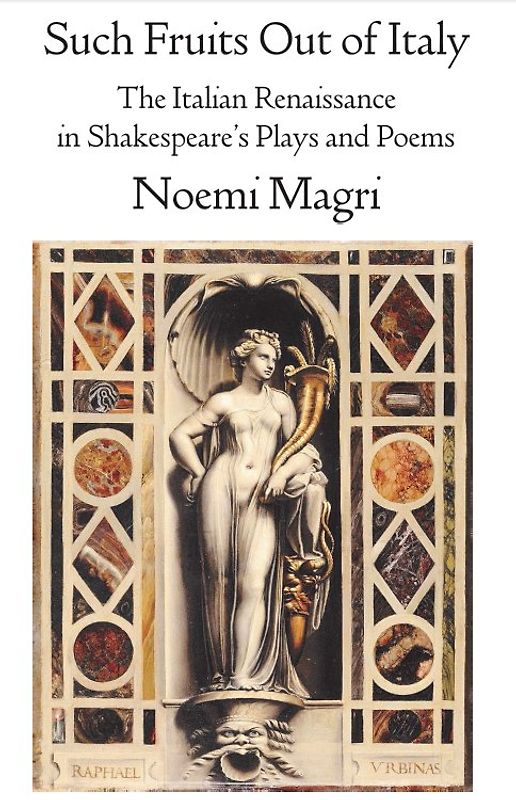
An Italian scholar has answered a 400 year old question – are the allusions to Italian culture, geography and language in Shakespeare’s works accurate or imagined? The answer, according to the late Noemi Magri, PhD, is definitive, the result of the Bard’s personal experience from living in Italy and his extensive knowledge of Italian history.
Such Fruits Out of Italy is the product of 15 years… research by the Italian Fulbright scholar (New York University, 1985) and instructor of English at Mantua’s ITIS School, who passed away in May 2011. The book, a compilation of articles which appeared in British and American publications starting in 1998, has been welcomed by Shakespeare scholars.
“Noemi Magri's combination of a detailed first-hand knowledge of Italian geography, architecture, art, and history with a cool-headed, rigorous approach to scholarship results in the kind of dazzling criticism that is rare in Shakespeare studies,” stated Warren Hope, Professor of English at the University of the Sciences in Philadelphia. “She is unlike those traditional Shakespeare scholars who, as she says, ‘rejoice’ in finding factual errors in Shakespeare. Instead, she rejoices in finding the reality that is behind Shakespeare's work. Her identification of the actual paintings described in the Induction to Shakespeare's The Taming of the Shrew is a tour de force, but her whole book crackles with the passion of discovery. It is not to be missed.”
Michael Delahoyde, Clinical Professor of English at Washington State University, was equally effusive. “Not only does Noemi Magri assure us that ‘Nothing in Shakespeare is meaningless,’ she shows this to be the case with numerous overlooked or misinterpreted details regarding Shakespeare's intimate knowledge of Italy: its art, geography, politics, law, etymologies, and more. Collecting Magri's work into one volume here, Such Fruits Out of Italy is a treasury of Shakespearean discoveries, and a triumph of scholarship.”
Dr. Magri’s research yielded the following discoveries:
1. That transportation among the northern Italian cities in the 16th century was conducted mostly through a complex network of canals that connected the streams and tributaries of the Po and Adige Rivers to one another. The references in Two Gentlemen of Verona of traveling from Verona to Milan by boat was not only feasible but the preferred way to travel between inland cities in northern Italy.
2. That the primary source of Shakespeare’s narrative poem, Venus and Adonis, was not Ovid’s Metamorphoses or even Titian’s painting of Venus and Adonis in the Prado Museum, but a unique version of the same painting by Titian held by the artist in Venice until his death, now in the National Gallery of Palazzo Barberini in Rome.
3. That the identity of the three wanton paintings described by Shakespeare in the Induction Scene of The Taming of the Shrew are: Venus and the Rose by Luca Penni; Io by Correggio; and Apollo and Daphne by an anonymous artist.
4. That the historical location of Belmont in The Merchant of Venice was the Villa Foscari on the Brenta River, designed by the Italian architect, Palladio.
5. That the historical location of Saint Jacques Le Grand in All’s Well That Ends Well was San Giacomo Maggiore, near Florence, Italy – not Santiago de Compostela in France.
6. That the historical location of Othello and Desedoma’s house in Venice – the Saggitary – was on the Frezzaria near St. Mark’s Square – the street where arrows were made and sold.
7. That the historical location of Illyria in Twelfth Night and The Winter’s Tale was Epirus, or Byzantine Illyria, ruled by the Orsini family for centuries. The Orsini were Dukes but, like Duke Orsino in Twelfth Night, Counts as well. Specifically, the Orisini of Epirus were Counts of Kefalonia, Zante and Ithaca.
8. That The Murder of Gonzago in Hamlet was based on the actual murder of the Duke of Urbino in Venice, who had poison poured in his ears, just as the King in Hamlet. Dieses Produkt haben wir gerade leider nicht auf Lager.
Handgeprüfte Gebrauchtware
Bis zu 50 % günstiger als neu
Der Umwelt zuliebe
Technische Daten
Erscheinungsdatum
01.08.2014
Sprache
Englisch
EAN
9783933077370
Herausgeber
Laugwitz, U
Serien- oder Bandtitel
Neues Shake-speare Journal
Sonderedition
Nein
Autor
Noemi Magri
Seitenanzahl
300
Auflage
1
Einbandart
Broschiert
-.-
★★★★★
☆☆☆☆☆ Leider noch keine Bewertungen
Leider noch keine Bewertungen
Sicher bei rebuy kaufen

Schreib die erste Bewertung für dieses Produkt!
Wenn du eine Bewertung für dieses Produkt schreibst, hilfst du allen Kund:innen, die noch überlegen, ob sie das Produkt kaufen wollen. Vielen Dank, dass du mitmachst!
Sicher bei rebuy kaufen