
iPhoneAlle anzeigen
iPhone 11iPhone 11 ProiPhone 11 Pro MaxiPhone 12iPhone 12 ProiPhone 12 Pro MaxiPhone 12 miniiPhone 13iPhone 13 ProiPhone 13 Pro MaxiPhone 13 miniiPhone 14iPhone 14 PlusiPhone 14 ProiPhone 14 Pro MaxiPhone 15iPhone 15 PlusiPhone 15 ProiPhone 15 Pro MaxiPhone 16iPhone 16 PlusiPhone 16 ProiPhone 16 Pro MaxiPhone 16eiPhone 8iPhone 8 PlusiPhone SE 2020iPhone SE 2022iPhone XiPhone XRiPhone XSiPhone XS Max
Galaxy A-SerieAlle anzeigen
Galaxy A12Galaxy A13Galaxy A13 5GGalaxy A14Galaxy A15Galaxy A16Galaxy A17 5GGalaxy A20eGalaxy A21Galaxy A22Galaxy A23Galaxy A24Galaxy A25Galaxy A26 5GGalaxy A32Galaxy A33Galaxy A34Galaxy A35Galaxy A36 5GGalaxy A40Galaxy A41Galaxy A42Galaxy A50Galaxy A51Galaxy A52Galaxy A53Galaxy A54Galaxy A55Galaxy A56 5GGalaxy A70Galaxy A71Galaxy A72
Redmi SeriesAlle anzeigen
Redmi 10Redmi 13CRedmi 15 5GRedmi Note 10Redmi Note 10 ProRedmi Note 11Redmi Note 11 ProRedmi Note 11 Pro Plus 5GRedmi Note 11sRedmi Note 12Redmi Note 12 5GRedmi Note 12 ProRedmi Note 12 Pro 5GRedmi Note 12 Pro PlusRedmi Note 13Redmi Note 13 5GRedmi Note 13 ProRedmi Note 13 Pro PlusRedmi Note 14Redmi Note 14 Pro PlusRedmi Note 8Redmi Note 8 ProRedmi Note 9Redmi Note 9 Pro
- Startseite
Bücher Wissen & Bildung Geisteswissenschaft, Kunst, Musik Geschichte Altertum Der Innenraum hellenistischer Tempel
Derzeit nicht verfügbar
Handgeprüfte Gebrauchtware
Bis zu 50 % günstiger als neu
Der Umwelt zuliebe
Der Innenraum hellenistischer Tempel
Philipp Kobusch (Gebundene Ausgabe, Deutsch)
★★★★★
☆☆☆☆☆ Keine Bewertungen vorhanden
Optischer Zustand
Beschreibung
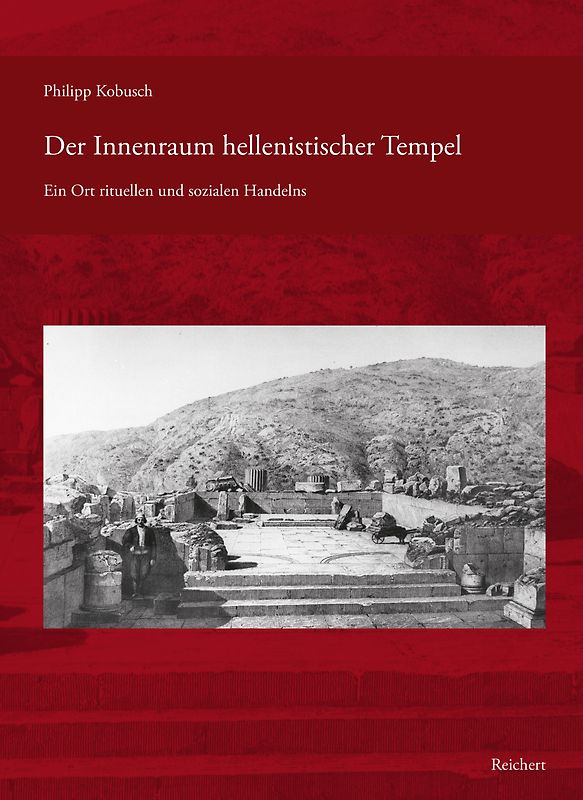
Since the beginning of academic interest in Greek culture, a special focus in research has been on Greek temple buildings. Nevertheless, until well into the 2000s, their significance in Greek ritual was often categorically denied: The architecture of the temples was understood merely as a façade in front of which the central rituals at the altar took place outside the temple itself. Their… interiors were simply regarded as storage places for the cult image, which remained inaccessible to a broader public. It is only since the late 1990s that this picture has been sporadically questioned in ancient studies, but always only on the basis of limited evidence. The present study is the first to compile the archaeologically verifiable functional objects from temple interiors on the one hand and the actions that have been described in written sources on the other. This interdisciplinary approach provides a solid basis for evaluating the spectrum of uses of Greek temple interiors. The underlying premise for a study of temples as a space for action is that they can be entered by a broad public as a matter of course. This thesis can be proven without a doubt by a large number of literary and epigraphic sources that have been systematically compiled here for the first time. The study shows that temple interiors were a central place for (ritual) communication with the deity. Besides prayers, this also included specific forms of sacrifice that took place parallel to and in addition to the main sacrifice at the altar. Archaeological evidence of this use can be found in the form of permanently installed sacrificial devices such as tables, thesauroi and incense burners. Temples also served as treasure rooms, places for the enjoyment and reception of art, and could be involved in sometimes complex administrative processes, especially if the temple was part of an active financial institution. However, it can also be shown that such a prominent (ritual) space was always an important place of complex social negotiation and communication processes. Contrary to common academic opinion, Greek temple interiors played a central role in the ritual and social practices of Greek culture. For an overall picture of the phenomenon of Greek temples, however, it is crucial that the balance and spatial arrangement of the individual aspects differed considerably from one temple to the next. From this it can be deduced that the temple architecture, which was strongly standardised in its basic features, was not based on a uniform concept of use. Rather, different interests and requirements were taken into account in local negotiations, which assigned each temple interior an individual character as a space for action. Dieses Produkt haben wir gerade leider nicht auf Lager.
Handgeprüfte Gebrauchtware
Bis zu 50 % günstiger als neu
Der Umwelt zuliebe
Technische Daten
Erscheinungsdatum
02.06.2022
Sprache
Deutsch
EAN
9783752000092
Herausgeber
Reichert, L
Sonderedition
Nein
Autor
Philipp Kobusch
Seitenanzahl
368
Einbandart
Gebundene Ausgabe
Buch Untertitel
Ein Ort rituellen und sozialen Handelns
Autorenporträt
Philipp Kobusch (*1980) studied Classical Archaeology and Medieval and Modern History in Gießen from 2001 to 2006. His doctorate on "Die Grabbauten im römischen Hispanien. Zur kulturellen Prägung der Sepulkralarchitektur" in 2011 was awarded a one-year travel grant by the German Archaeological Institute. From 2012 to 2022, he was a research assistant at the Institute of Classics, Department of Classical Archaeology at the Christian-Albrecht University of Kiel (CAU).
Hersteller: Dr. Ludwig Reichert Verlag Inhaberin Ursula Reichert, Tauernstraße 11, Wiesbaden, Deutschland, 65199, info@reichert-verlag.de, Ursula Reichert
-.-
★★★★★
☆☆☆☆☆ Leider noch keine Bewertungen
Leider noch keine Bewertungen
Sicher bei rebuy kaufen
Schreib die erste Bewertung für dieses Produkt!
Wenn du eine Bewertung für dieses Produkt schreibst, hilfst du allen Kund:innen, die noch überlegen, ob sie das Produkt kaufen wollen. Vielen Dank, dass du mitmachst!
Sicher bei rebuy kaufen