
iPhoneAlle anzeigen
iPhone 11iPhone 11 ProiPhone 11 Pro MaxiPhone 12iPhone 12 ProiPhone 12 Pro MaxiPhone 12 miniiPhone 13iPhone 13 ProiPhone 13 Pro MaxiPhone 13 miniiPhone 14iPhone 14 PlusiPhone 14 ProiPhone 14 Pro MaxiPhone 15iPhone 15 PlusiPhone 15 ProiPhone 15 Pro MaxiPhone 16iPhone 16 PlusiPhone 16 ProiPhone 16 Pro MaxiPhone 16eiPhone 8iPhone 8 PlusiPhone SE 2020iPhone SE 2022iPhone XiPhone XRiPhone XSiPhone XS Max
Galaxy A-SerieAlle anzeigen
Galaxy A12Galaxy A13Galaxy A13 5GGalaxy A14Galaxy A15Galaxy A16Galaxy A17 5GGalaxy A20eGalaxy A21Galaxy A22Galaxy A23Galaxy A24Galaxy A25Galaxy A26 5GGalaxy A32Galaxy A33Galaxy A34Galaxy A35Galaxy A36 5GGalaxy A40Galaxy A41Galaxy A42Galaxy A50Galaxy A51Galaxy A52Galaxy A53Galaxy A54Galaxy A55Galaxy A56 5GGalaxy A70Galaxy A71Galaxy A72
Redmi SeriesAlle anzeigen
Redmi 10Redmi 13CRedmi 15 5GRedmi Note 10Redmi Note 10 ProRedmi Note 11Redmi Note 11 ProRedmi Note 11 Pro Plus 5GRedmi Note 11sRedmi Note 12Redmi Note 12 5GRedmi Note 12 ProRedmi Note 12 Pro 5GRedmi Note 12 Pro PlusRedmi Note 13Redmi Note 13 5GRedmi Note 13 ProRedmi Note 13 Pro PlusRedmi Note 14Redmi Note 14 Pro PlusRedmi Note 8Redmi Note 8 ProRedmi Note 9Redmi Note 9 Pro
- Startseite
Bücher Englische Bücher Wissen & Bildung Sozialwissenschaft, Recht, Wirtschaft Politikwissenschaft Politisches System Power factor typology through Organizational and Network analysis
Derzeit nicht verfügbar
Handgeprüfte Gebrauchtware
Bis zu 50 % günstiger als neu
Der Umwelt zuliebe
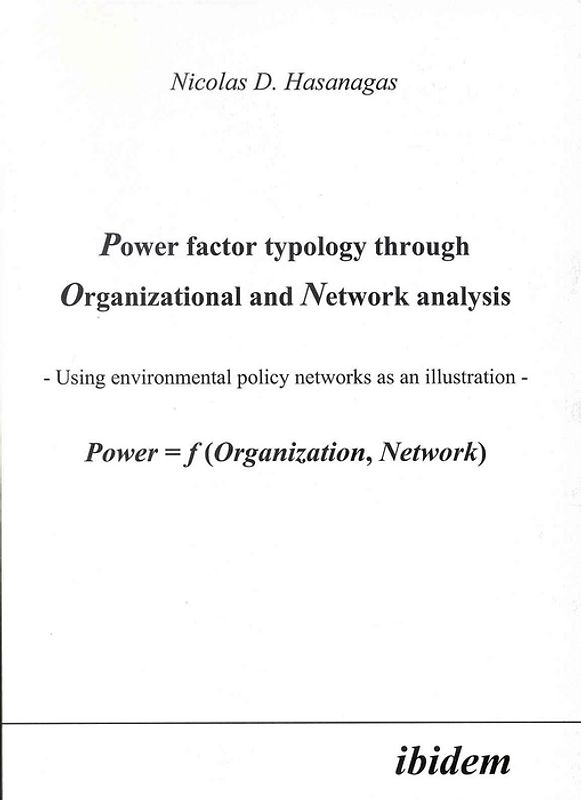
Power factor typology through Organizational and Network analysis
Nikolaos Hasanagas (Broschiert, Englisch)
★★★★★
☆☆☆☆☆ Keine Bewertungen vorhanden
Optischer Zustand
Beschreibung
Who can be powerful and when? Power is a function of network and organizational characteristics and therefore denies an actor (e.g. a NGO or trade union) to be powerful in all networks. To prove this idea, power and institutional theories as well as organizational models will come into use while proposing different types of power factors. Such factors include combinations of organizational and… network characteristics that combine to produce high power synergy and low inconsistency. The first dimension of power is trust: the trustee leads the one who trusts. The second dimension is financial incentive: the gift giver influences the gift receiver. The third dimension is irreplaceability. The typology of power factors (organizational and network characteristics) was derived from both inductive and deductive processes. By using statistics-based vector algebra as a basis for the methodology, a survey covering 12 environmental policy networks in 8 European countries was conducted and more knowledge on power was obtained. Dieses Produkt haben wir gerade leider nicht auf Lager.
Handgeprüfte Gebrauchtware
Bis zu 50 % günstiger als neu
Der Umwelt zuliebe
Technische Daten
Erscheinungsdatum
19.07.2004
Sprache
Englisch
EAN
9783898213868
Herausgeber
ibidem
Sonderedition
Nein
Autor
Nikolaos Hasanagas
Seitenanzahl
162
Auflage
1
Einbandart
Broschiert
Buch Untertitel
Using environmental policy networks as an illustration
Autorenporträt
Nicolas D. Hasanagas studied Planning and Development of Natural Resources (MEng. eq.) at Aristotle University of Thessaloniki in Greece, Sociology, Political Science and Ethnology (MA) at Goettingen University in Germany, and he obtained his PhD in Social Sciences in 2004 at Goettingen University as well. While focusing on organizational research and policy research, he was a functionary in various NGOs and is currently a member of several academic and professional bodies. He participated in developmental and research EU projects and has published in several academic and practical journals. In addition, he has conducted presentations at international conferences concerning Organizational Theory, EU policy-making and institutional analysis, Policy Analysis, Environmental Policy, Science Studies and Development Policy.
Höhe
210 mm
Breite
15 cm
-.-
★★★★★
☆☆☆☆☆ Leider noch keine Bewertungen
Leider noch keine Bewertungen
Sicher bei rebuy kaufen

Schreib die erste Bewertung für dieses Produkt!
Wenn du eine Bewertung für dieses Produkt schreibst, hilfst du allen Kund:innen, die noch überlegen, ob sie das Produkt kaufen wollen. Vielen Dank, dass du mitmachst!
Sicher bei rebuy kaufen