
iPhoneAlle anzeigen
iPhone 11iPhone 11 ProiPhone 11 Pro MaxiPhone 12iPhone 12 ProiPhone 12 Pro MaxiPhone 12 miniiPhone 13iPhone 13 ProiPhone 13 Pro MaxiPhone 13 miniiPhone 14iPhone 14 PlusiPhone 14 ProiPhone 14 Pro MaxiPhone 15iPhone 15 PlusiPhone 15 ProiPhone 15 Pro MaxiPhone 16iPhone 16 PlusiPhone 16 ProiPhone 16 Pro MaxiPhone 16eiPhone 8iPhone 8 PlusiPhone SE 2020iPhone SE 2022iPhone XiPhone XRiPhone XSiPhone XS Max
Galaxy A-SerieAlle anzeigen
Galaxy A12Galaxy A13Galaxy A13 5GGalaxy A14Galaxy A15Galaxy A16Galaxy A17 5GGalaxy A20eGalaxy A21Galaxy A22Galaxy A23Galaxy A24Galaxy A25Galaxy A26 5GGalaxy A32Galaxy A33Galaxy A34Galaxy A35Galaxy A36 5GGalaxy A40Galaxy A41Galaxy A42Galaxy A50Galaxy A51Galaxy A52Galaxy A53Galaxy A54Galaxy A55Galaxy A56 5GGalaxy A70Galaxy A71Galaxy A72
Redmi SeriesAlle anzeigen
Redmi 10Redmi 13CRedmi 15 5GRedmi Note 10Redmi Note 10 ProRedmi Note 11Redmi Note 11 ProRedmi Note 11 Pro Plus 5GRedmi Note 11sRedmi Note 12Redmi Note 12 5GRedmi Note 12 ProRedmi Note 12 Pro 5GRedmi Note 12 Pro PlusRedmi Note 13Redmi Note 13 5GRedmi Note 13 ProRedmi Note 13 Pro PlusRedmi Note 14Redmi Note 14 Pro PlusRedmi Note 8Redmi Note 8 ProRedmi Note 9Redmi Note 9 Pro
Derzeit nicht verfügbar
Handgeprüfte Gebrauchtware
Bis zu 50 % günstiger als neu
Der Umwelt zuliebe
Optischer Zustand
Beschreibung
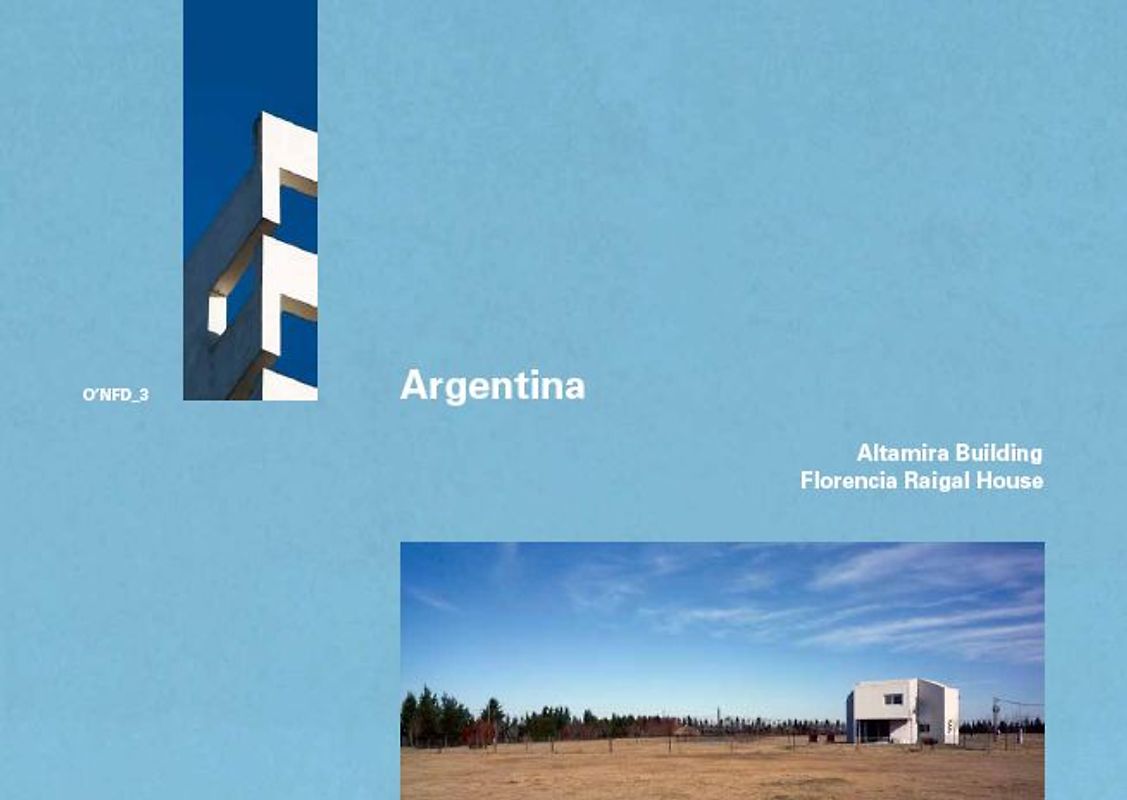
The third O’Neil Ford Duograph presents a high-rise and a free-standing house, two common building types of contemporary architecture. These buildings are located in Rosario, Argentina’s third largest city after the capital Buenos Aires and Córdoba, a city with a dense aggregation of high-rises in the downtown area, surrounded by the conventional suburban belt, which is now spreading deep into the… Pampas.
The specific resolution of the two buildings is anything but typical. This Duograph offers close examinations, revealing the two buildings to be radical reinterpretations of their types. Marcelo Villafañe’s small house for Florencia Raigal integrates a spatial specificity - in continuation of the modernist free plan - with a "parlante" configuration: a house that comes to life with a distinct sculptural roof that happens to be hipped, but actually originates in the three dimensional reanimation of an abstracted cow-hide, so typical and at the same time so distinctive of Argentina, a country of "gauchos, asados & quinchos" (cowboys, barbecues and grill pavillons). With orthodox modernism’s stricture on the use of pitched roofs and the subsequent loss of knowledge regarding the plastic-sculptural potential of a building, or more generally modernism’s fear of the figurative, few architects have tried to re-enter this domain of a configured architecture. In this small house Villafañe shows in a wordless but built manifesto all his design control. Belying the house’s casualness there is a compositional rigor which clearly surfaces upon close reading.
From a distance, Rafael Iglesia’s high-rise building - Altamira (High View) - looks as if it is just another one of those late modernist towers. In fact, it radically breaks with the skeletal frame convention of orthodox high-rises. Iglesia‘s high-rise places the Miesian skyscrapers more closely in line with Sullivan’s tripartite "tall office building" discourse than most modernists would be ready to accept. Iglesia is able to break from this convention because he has been interrogating both the nature of residences in general (and specifically for high-rises) as well as the structural consequences in particular. The result of his studies is a cantilevering structure of unprecedented daring, in fact a double cantilever both in the horizontal as well as in the vertical sense. The strict control of the details, specifically the structural openings and the related line of glazing, serve to emphasize the "brut" quality of the concept, structure and materialization.
As with previous volumes in the O’Neil Ford Duograph series, the third volume presents one building by each of two different architects from a single country. By having two buidlings featured within a single book, the series editors wish to let the architects and their work speak as directly as possible through the printed page. Drawings, sketches and photographs present each building in context and detail, providing a comprehensive account. Dieses Produkt haben wir gerade leider nicht auf Lager.
Handgeprüfte Gebrauchtware
Bis zu 50 % günstiger als neu
Der Umwelt zuliebe
Technische Daten
Erscheinungsdatum
31.01.2011
Sprache
Englisch
EAN
9783803007193
Herausgeber
Verlag Wasmuth & Zohlen
Serien- oder Bandtitel
O'Neil Ford Duograph Series
Sonderedition
Nein
Seitenanzahl
144
Auflage
1
Einbandart
Broschiert
Buch Untertitel
Altamira Building, 1998-2001 by Rafael Iglesia /Florencia Raigal House, 2005-2006 by Marcelo Villafañe
-.-
★★★★★
☆☆☆☆☆ Leider noch keine Bewertungen
Leider noch keine Bewertungen
Sicher bei rebuy kaufen

Schreib die erste Bewertung für dieses Produkt!
Wenn du eine Bewertung für dieses Produkt schreibst, hilfst du allen Kund:innen, die noch überlegen, ob sie das Produkt kaufen wollen. Vielen Dank, dass du mitmachst!
Sicher bei rebuy kaufen